
 Bookmark
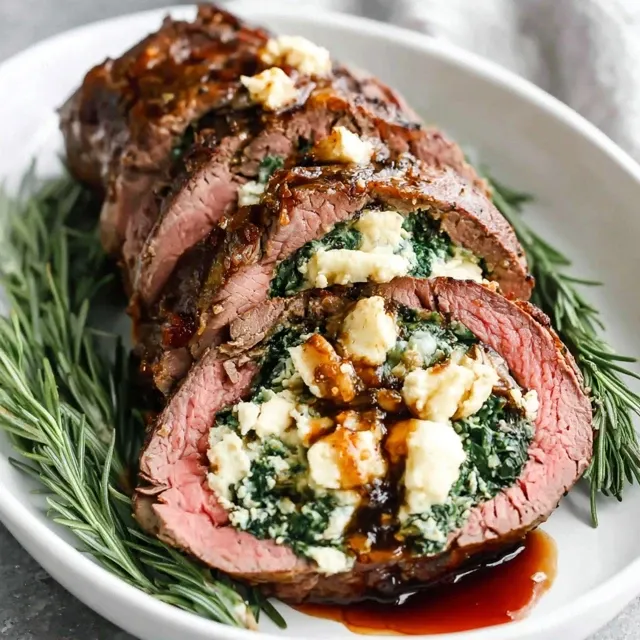
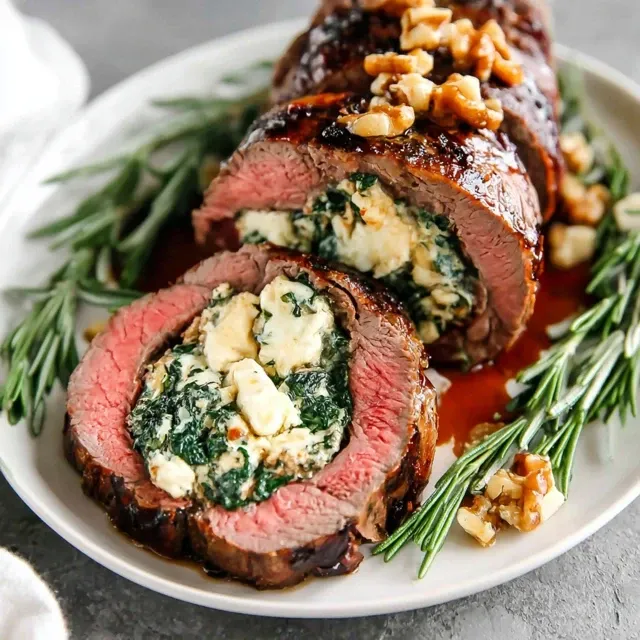
This Christmas Stuffed Beef Tenderloin transforms your holiday table into a celebration worthy of the occasion. The buttery herb stuffing creates beautiful pinwheels when sliced, making this centerpiece as visually stunning as it is delicious. I've perfected this recipe through years of holiday entertaining, and it never fails to elicit gasps of appreciation when brought to the table.
This recipe became our family tradition after I served it at a Christmas gathering where everyone insisted on the recipe. Now my children associate the aroma of this roasting tenderloin with holiday magic, making it our non-negotiable Christmas main course.
Ingredients
- Beef tenderloin Choose center cut for uniform cooking and the most tender results. The marbling should be minimal but present for optimal flavor.
- Panko breadcrumbs Creates lighter texture and better absorption of butter than regular breadcrumbs. The Japanese-style crumbs maintain structure during roasting.
- Unsalted butter Forms the rich base of the stuffing. European-style butter with higher fat content elevates this dish remarkably.
- Fresh parsley Adds bright color and herbaceous notes. Always choose flat-leaf variety for more pronounced flavor than curly parsley.
- Garlic Provides aromatic depth to complement the beef. Fresh cloves yield infinitely better results than pre-minced versions.
Step-by-Step Instructions
- Preheat Oven
- Set your oven to 425°F with the rack positioned in the middle. This high initial temperature creates a beautiful exterior crust while allowing the inside to remain tender. Allow at least 15 minutes for proper preheating to ensure even cooking.
- Prepare Stuffing
- Combine breadcrumbs with finely chopped onion and minced garlic in a large mixing bowl. Pour the melted butter over the mixture while still warm but not hot. Fold in the chopped parsley last to preserve its vibrant color. The stuffing should hold together when squeezed but still remain loose enough to spread evenly.
- Butterfly the Tenderloin
- Place the beef on a cutting board with the narrow end facing you. Starting about an inch from the bottom, slice horizontally through the meat, cutting almost all the way through. Open the beef like a book. Continue cutting and unfolding until you have a flat rectangle of even thickness. Use a meat mallet to gently even out thicker sections if needed.
- Apply Stuffing
- Spread the butter mixture evenly across the flattened beef, leaving a one-inch border around all edges. Press the stuffing gently into the meat to help it adhere during the rolling process. The layer should be approximately half an inch thick throughout.
- Roll and Secure
- Starting with the long edge closest to you, tightly roll the tenderloin, keeping tension on the roll to prevent gaps. Secure the roll with butcher's twine at one-inch intervals, tying firmly but not so tight that it cuts into the meat. Season the exterior generously with salt and freshly ground black pepper.
- Roast to Perfection
- Place the rolled tenderloin on a wire rack set inside a roasting pan. The elevated position allows air to circulate for even cooking. Insert an instant-read thermometer into the thickest part before placing in the oven. Roast until the internal temperature reaches 135°F for medium-rare or 150°F for medium, approximately 50-70 minutes depending on thickness.
- Rest Before Slicing
- Transfer the roast to a cutting board and tent loosely with foil. Allow to rest undisturbed for at least 10 minutes, preferably 15. This crucial step allows juices to redistribute throughout the meat. The temperature will continue rising about 5-10 degrees during this time.
 Bookmark
My absolute favorite component is the garlic-infused butter that creates pockets of flavor throughout the roll. The first time I served this at our family Christmas, my father-in-law who typically offers polite but restrained compliments actually stood up to toast the chef. That moment cemented this dish as our holiday tradition.
Make-Ahead Options
This elegant centerpiece can be prepared up to 24 hours before roasting. Butterfly and stuff the tenderloin, roll it tightly, then wrap in plastic film and refrigerate. Remove from the refrigerator 2 hours before cooking to allow it to come to room temperature. This advance preparation not only saves time during the holiday rush but actually improves flavor as the stuffing ingredients meld together overnight.
Selecting the Perfect Tenderloin
When shopping for beef tenderloin, request the center cut from your butcher. This section, also called the chateaubriand, provides the most consistent thickness for even cooking. Ask the butcher to remove the silverskin but leave a thin layer of fat for flavor. For a gathering of 6-8 people, a 4-pound tenderloin provides generous portions. The quality of the beef significantly impacts the final dish, so purchase the best your budget allows. USDA Choice or Prime grades offer superior marbling and tenderness.
Serving Suggestions
Present this stunning centerpiece on a large wooden board or platter garnished with fresh rosemary sprigs and cranberries for a festive touch. Slice the tenderloin into one-inch medallions to showcase the beautiful spiral pattern. This roast pairs wonderfully with roasted fingerling potatoes, glazed carrots, and a full-bodied red wine such as Cabernet Sauvignon or Merlot. For an elegant sauce option, consider a red wine reduction or mushroom gravy served alongside rather than poured over the slices to preserve the visual impact of the pinwheels.
Storage and Reheating
Store leftover tenderloin tightly wrapped in the refrigerator for up to three days. For best results when reheating, slice the cold tenderloin into medallions and warm them gently in a covered skillet with a splash of beef broth. Avoid microwave reheating which can toughen the meat. Alternatively, cold slices make extraordinary sandwiches when paired with horseradish cream on crusty bread. The stuffed tenderloin does not freeze well as the texture of both meat and stuffing deteriorates during the thawing process.
Recipe FAQs
- → How do I butterfly a beef tenderloin for stuffing?
To butterfly a beef tenderloin, place it on a cutting board and make a lengthwise cut about an inch deep. As you cut, gently unroll or unfold the meat, continuing to slice deeper while maintaining the same thickness throughout. Work slowly until the tenderloin lies flat like an open book. This creates the perfect surface for adding stuffing before rolling it back up.
- → What internal temperature should I aim for with beef tenderloin?
For medium-rare beef tenderloin, aim for an internal temperature of 145°F. For medium, cook to 160°F. Remember to remove the roast from the oven when it's about 10 degrees below your target temperature, as it will continue cooking during the resting period. Always use a meat thermometer inserted into the thickest part for accuracy.
- → Why is it important to let the tenderloin rest before slicing?
Resting your tenderloin for at least 10 minutes allows the juices to redistribute throughout the meat. If you slice immediately after removing from the oven, the juices will run out onto your cutting board, resulting in drier meat. Proper resting ensures each slice remains moist, tender, and flavorful while also allowing the meat to finish cooking from residual heat.
- → Can I prepare the stuffed tenderloin ahead of time?
Yes, you can prepare the stuffed and tied tenderloin up to 24 hours in advance. Prepare it completely, wrap tightly in plastic wrap, and refrigerate. Remove from the refrigerator about 1-2 hours before cooking to allow it to come closer to room temperature. This ensures more even cooking and may reduce the cooking time slightly.
- → What can I serve alongside this stuffed beef tenderloin?
This centerpiece pairs beautifully with holiday sides like roasted potatoes, Brussels sprouts, or green beans. A rich red wine sauce or mushroom gravy complements the beef perfectly. For a complete festive spread, add cranberry sauce, dinner rolls, and a winter salad with nuts and dried fruits. The elegant presentation works wonderfully with equally sophisticated accompaniments.
- → How do I properly tie the rolled tenderloin with butcher's twine?
After rolling the tenderloin with stuffing, secure it by tying butcher's twine at 1-inch intervals along the entire length. Start from the middle, then work outward. For each tie, loop the twine around the roll, pull it snug (but not tight enough to squeeze out stuffing), and secure with a simple knot. Proper tying keeps the roll tight and ensures the stuffing stays in place during roasting.